Buffalo Charge RTP: Return to Player, Odds, and RTP Percentage Explained
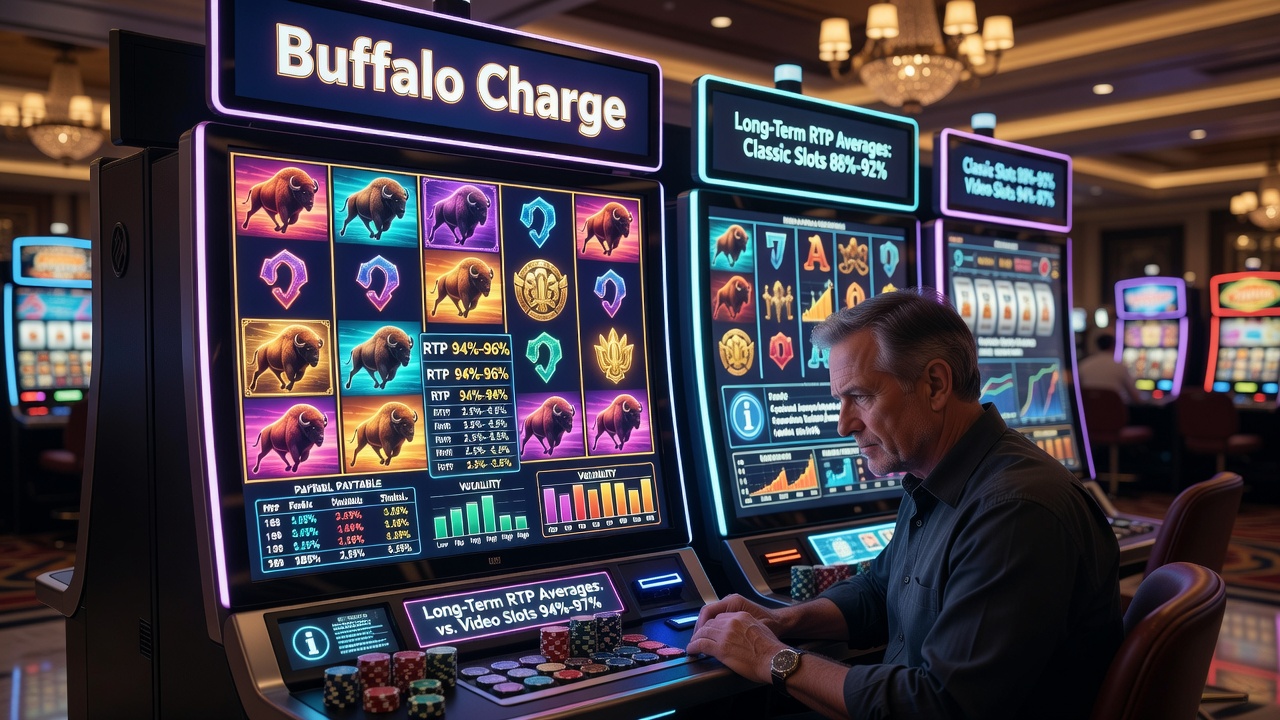
A single percentage point on a slot machine's payout table can shift a player's long-term losses by hundreds of dollars over a year of regular play. That's the practical weight behind Buffalo Charge RTP figures, and it's why serious players stop chasing bonus rounds and start reading paytables instead. Buffalo Charge, part of the wider buffalo-themed slot family that casinos have leaned on for over a decade, carries a return-to-player rate that determines exactly how much of every wagered dollar theoretically comes back to the player over millions of spins.
Most casual spinners never check this number. They judge a game by its animations, its bonus frequency, or how it "felt" during a session. That approach ignores the one statistic that actually predicts long-run outcomes. Buffalo Charge game RTP sits within a band that's standard for modern video slots, but the exact figure matters more than people assume, because a half-percent difference compounds significantly across thousands of spins. Before committing real money, it's worth reviewing the payout structure through a resource like charge buffalo rtp, which breaks down how the math translates into actual session behavior. Understanding this number reframes how a player should approach bet sizing, session length, and expectations.
This piece walks through what RTP actually measures, how Buffalo Charge's specific percentage compares to genre norms, what the odds structure looks like beneath the surface, and how to use all of this information to play smarter rather than simply longer.
What RTP Really Means for Buffalo Charge Players
Return to player is a theoretical long-term average, not a promise attached to any single session. It describes the percentage of all money wagered on a game that gets paid back to players collectively over an enormous sample size - typically calculated across tens of millions of simulated or real spins. Buffalo Charge RTP return to player figures are generated by the game's mathematical model, tested and certified by independent labs before the title ever reaches a casino floor.
The Difference Between Theoretical and Actual Returns
A published RTP of, say, 96% does not mean a player will get back 96 cents of every dollar during a two-hour session. It means that across the full lifetime of the game - every spin by every player everywhere it's deployed - the payout converges toward that figure. Short sessions swing wildly above or below the average; that variance is normal and expected, not evidence the number is wrong.
Why House Edge Is the Flip Side of RTP
Subtract the RTP from 100% and the remainder is the house edge - the built-in margin that keeps casinos profitable. A game with a 95.5% RTP carries a 4.5% house edge. This isn't hidden or unusual; it's the mechanism that funds the entire gambling industry, and every legitimately licensed slot discloses it somewhere in its help menu or paytable.
How RTP Is Calculated and Certified
Game studios run millions of simulated spins using the same random number generator logic deployed in live play. Testing labs then verify these results independently before regulators approve the game for release. This certification process is what separates a legitimate Buffalo Charge slot RTP percentage from marketing claims with no mathematical backing.
Buffalo Charge Slot RTP Percentage Breakdown
Buffalo-themed slots have historically clustered around the 94% to 96.5% range, and Buffalo Charge follows that convention closely. The exact certified figure can vary slightly depending on the casino operator and regional licensing jurisdiction, since some platforms configure multiple RTP variants of the same game for different markets.
Where Buffalo Charge Sits Within Its Genre
Compared to classic three-reel machines, which often hover in the 90-92% range, Buffalo Charge's percentage reflects modern video slot standards that generally favor players more generously. This places it in a competitive middle tier - not the most generous title on the market, but far from the stingiest either.
Why the Percentage Can Differ Between Casinos
Operators sometimes license adjustable RTP configurations from the game provider, choosing a lower or higher setting based on local regulation or business strategy. This means the Buffalo Charge RTP odds you encounter at one platform might differ marginally from another, even though the core game mechanics look identical.
Reading the In-Game Paytable for Confirmation
Every reputable version of the game discloses its certified RTP inside the information or help screen, usually accessible through a small "i" icon. Players should check this before depositing, since it removes any guesswork about what percentage applies to their specific version.
- Standard video slot RTP range: 94%-97%
- Classic three-reel RTP range: 88%-92%
- Buffalo Charge typically falls within the modern video slot bracket
Understanding the Odds Behind Buffalo Charge
RTP tells you the average payback rate, but odds describe something different: the actual probability of landing specific symbol combinations, triggering bonus features, or hitting the jackpot tier. Buffalo Charge RTP odds are shaped by the game's reel configuration, symbol weighting, and the volatility setting the developer chose.
Volatility and Its Relationship to RTP
A slot can have the exact same RTP as another game yet feel completely different to play, because volatility governs how payouts are distributed. High-volatility titles pay out less frequently but with larger individual wins; low-volatility titles pay smaller amounts more often. Buffalo Charge leans toward moderate-to-high volatility, meaning dry spells between meaningful wins are common, punctuated by larger payouts when bonus features trigger.
How Symbol Weighting Affects Real Outcomes
Not every symbol on the reels has an equal chance of appearing. Higher-value symbols are typically weighted to show up less often, while lower-value symbols fill most of the reel space. This weighting directly shapes the practical odds a player faces on any given spin, independent of the headline RTP figure.
Bonus Feature Frequency and Its Impact on Odds
Free spin rounds and multiplier features contribute a significant portion of a buffalo-style slot's total return. If the bonus round is rare but generous, the odds of triggering it on any single spin remain low even though it accounts for a large share of the game's overall payback percentage.
How Buffalo Charge Compares to Other Buffalo-Series Slots
The buffalo slot lineage spans several titles from different studios, each with its own mathematical model despite sharing thematic DNA - wild herds, sunset backdrops, and stampede-triggered bonus rounds.
Comparing RTP Figures Across the Buffalo Family
Some entries in the buffalo genre publish RTPs as high as 96.5%, while others sit closer to 94%. Buffalo Charge game RTP typically lands in the middle of that spread, making direct comparison useful for players deciding which specific title offers better long-term value.
Feature Set Differences That Influence Perceived Value
Beyond the raw percentage, features like stacked wilds, multiplier trails, and retrigger mechanics change how a game feels even when RTPs are similar. Buffalo Charge distinguishes itself through its stampede-triggered bonus mechanic, which affects both pacing and the practical odds of hitting a substantial win during a session.
Why Comparing RTP Alone Can Be Misleading
Two games with identical RTPs can produce very different session experiences depending on volatility and hit frequency. A player choosing between titles should weigh RTP alongside variance data rather than treating the percentage as the sole deciding factor.
Practical Strategies Based on Buffalo Charge RTP Data
Knowing the numbers only helps if it changes behavior at the table. Several practical adjustments follow logically from understanding Charge Buffalo RTP return to player figures and the volatility profile behind them.
Setting Realistic Bankroll Expectations
Given the moderate-to-high volatility profile, players should budget for extended stretches without significant wins. A bankroll sized for at least 200-300 spins at a chosen bet level gives the game's mathematical model enough room to express its intended payout pattern.
Bet Sizing Relative to Session Goals
Smaller bets extend playtime and reduce variance exposure per spin, which suits players prioritizing entertainment value over chasing large single hits. Larger bets increase the magnitude of both wins and losses without changing the underlying RTP, since the percentage applies uniformly regardless of stake size.
Recognizing When Session Variance Is Normal
A losing streak across fifty spins doesn't indicate a "cold" machine or malfunction - it's a statistically ordinary outcome given the game's variance. Players who understand this are less likely to make impulsive bet increases chasing losses that the math never guaranteed would reverse quickly.
Verifying RTP Claims Before You Play
Not every source citing a Buffalo Charge slot RTP percentage is reliable, and figures circulated on forums or unofficial review sites sometimes lag behind actual certified updates.
Checking Licensing and Regulatory Disclosures
Licensed casinos operating under recognized gaming authorities are required to publish certified RTP figures, either in the game itself or in a compliance section of their website. This is the most trustworthy source, since it reflects lab-tested data rather than anecdotal impressions.
Cross-Referencing Multiple Independent Sources
Comparing the figure across two or three reputable platforms helps confirm consistency. If one source reports a percentage noticeably different from others, it's worth investigating whether that operator runs a distinct RTP configuration.
Avoiding Outdated or Unverified Percentage Claims
Game studios occasionally update math models after release, which can shift the certified RTP slightly. Relying on the in-game help screen at the time of play remains the safest way to confirm the exact number governing that specific session.
Question: What is the average Buffalo Charge RTP percentage?
Buffalo Charge generally carries an RTP within the 94% to 96% range, consistent with modern video slot standards, though the exact certified figure can vary slightly by casino operator and licensing jurisdiction.
Question: Does a higher RTP guarantee better short-term results?
No. RTP is a long-term statistical average calculated over millions of spins, so it has little predictive power over any single session, which can still swing significantly above or below the theoretical percentage.
Question: How does volatility affect my experience differently from RTP?
RTP tells you the average payback rate over time, while volatility describes how that payback is distributed - frequent small wins versus rare large ones. Buffalo Charge's moderate-to-high volatility means longer gaps between wins, balanced by larger payouts when bonus features hit.
Question: Can the RTP change between different casinos offering Buffalo Charge?
Yes. Some operators license adjustable RTP configurations for the same base game, meaning the certified percentage at one platform can differ slightly from another even though the visuals and mechanics remain identical.
Question: Where can I confirm the exact RTP before playing?
Check the in-game help or information screen, usually marked with an "i" icon, which discloses the certified figure for that specific version. Licensed casino operators are also required to publish this data in their compliance or game information sections.
Question: Should I adjust my bet size based on the RTP percentage?
RTP applies uniformly regardless of stake size, so adjusting bets won't change the underlying percentage. However, smaller bets extend playtime and reduce variance exposure, which is a reasonable strategy if you're prioritizing session length over chasing large individual wins.